
Importance of Shriphal and Deepak in worship: Learn the scriptural secrets
Two inseparable parts of the puja plate
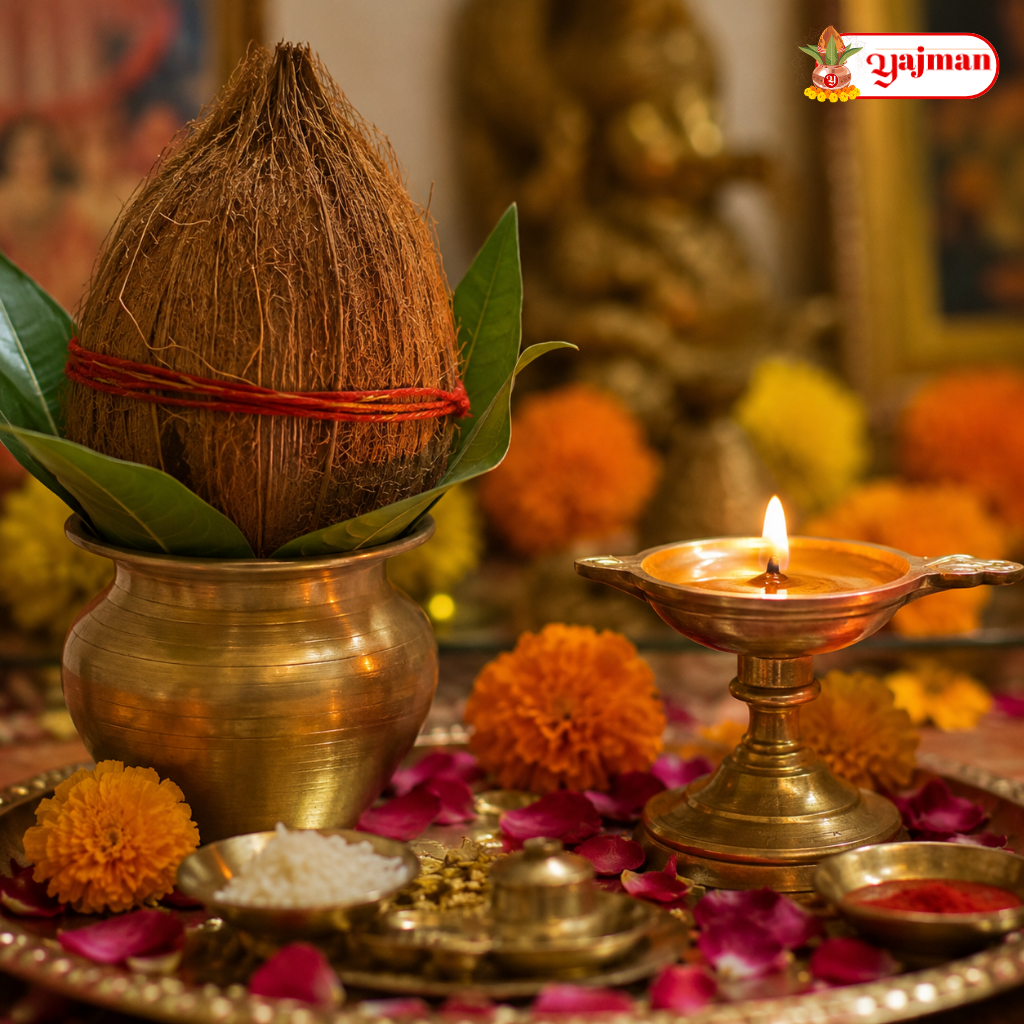
Be it the daily evening aarti at home, the sacred story of Lord Satyanarayan, the house warming ceremony or the Maha Yagya – two things are always present in the puja plate: the Shriphal (coconut) placed on the Kalash and a lit lamp .
These two ingredients are so inherently ingrained in Sanatan culture that we often consider them mere formalities. But have you ever wondered why coconuts and lamps are essential to every Vedic and Puranic ritual?
The sages did not include any element in the ritual of worship without deep scientific, psychological, and spiritual reasoning. This pairing of the coconut and the lamp actually points the way to the transformation of human consciousness, both external and internal.
Spiritual and mythological secret of Shriphal (Coconut)
The connection between the naming of Shriphal and Goddess Lakshmi
In Sanskrit, "Shri" means Lakshmi, radiance, opulence, and auspiciousness. The coconut is called "Shriphal" (meaning, "fruit of Goddess Lakshmi") in the Vedas and Puranas. It is believed that when Lord Vishnu set foot on Earth to establish Dharma, he brought with him three priceless gifts symbolizing happiness and prosperity: Goddess Lakshmi, the Kamadhenu cow, and the Kalpavriksha (wishful tree) of coconut trees . For this reason, it is considered the abode of Goddess Lakshmi herself.
Mythological Origins: Journey from Vaikuntha to Earth
According to mythological accounts, when Maharishi Vishwamitra began creating a parallel universe to send King Trishanku to heaven in his physical form, he created a coconut tree as a human model. Its external structure resembles a human skull, with matted hair. This was later accepted as a sattvic sacrifice, which completely eliminated violent practices like human sacrifice and animal sacrifice in the Sanatan tradition and gave it the form of sattvic devotion.
Abode of the Trinity and the third eye of Lord Shiva
Three distinctive black dots or markings appear on the top of the coconut. According to the scriptures:
These three dots symbolize the three eyes of Lord Shiva (past, present and future).
From a spiritual point of view, the combined energy of the Trinity (Brahma, Vishnu, Mahesh) resides in it.
When fourteen gems emerged during the churning of the ocean, the Sriphal appeared along with the Kalpavriksha, which is a symbol of nectar-like life and immortality.
Symbolic meaning of breaking a coconut (renunciation of ego)
The practice of breaking coconuts in temples and auspicious functions has deep psychological and metaphysical meaning:
[Outer hard covering/ matted hair] – symbol of ego), anger, worldly disorders
↓ (Surrender/break down at the feet of the Lord) ↓
[Inner white part / water] – clear mind, sattvic consciousness and spiritual purity
When we break a coconut in front of God, it means that we are immersing our “hard shell of ego” at the feet of God and surrendering to the “pure soul” hidden within.
Essentials of Coconut Water
Only fresh coconut with water is always used in puja rituals .
Coconut water is considered extremely pure, germ-free and full of life-giving energy.
Dry, rotten or cracked coconut is prohibited in puja, as it causes negative energy and defects.
Major rituals where Shriphal is essential
Sankalp Vidhan: At the beginning of any puja, Sankalp is taken by holding water, Akshat, coin and Shriphal in the hand.
Kalash Sthapana: Water, mango leaves and a Shriphal wrapped in a red cloth or Kalava are placed in a copper or brass Kalash, which becomes the centre of the entire cosmic energy.
Purnahuti of Havan: At the end of the Yagya, the final offering is made to Agni Dev by filling ghee and medicines in a dry coconut shell (with tufts).
New Inauguration: Shriphal is offered as a remover of obstacles in house warming, new business, vehicle worship or marriage.
Scientific and scriptural significance of lamp (Pradeep)
Original meaning: Tamso Ma Jyotirgamay
A lamp is not just a clay or metal vessel; it is the eternal message of the victory of the light of knowledge over the darkness of ignorance. Its essence is contained in the mantra recited while lighting the lamp:
Deepjyoti: Parabrahma Deepjyotirjanardanh.
Deepo Haratu me sin sandhyadeep namostu te.
Shubham Karoti Kalyanamarogya Dhansampadah.
Shatrubuddhivinashaya lampjyotirnamostu te.
That is, the light of the lamp is the Supreme Being himself, which destroys our sins and ignorance and provides us with health, wealth and wisdom.
Rigvedic context and the brilliance of the fire element
The very first mantra of Rigveda starts with the praise of Agni: “Agnimilee Purohitam Yagyasya Devmritvijam…” . Fire is considered to be the most sacred element among the five elements (earth, water, fire, air, sky) because whatever is dedicated to fire, it purifies it and spreads it in the atmosphere. The flame of the lamp is the sattvik form of the same divine fire, which immediately removes negative waves from the place of worship.
Ghee Lamp vs Oil Lamp: Comparative Analysis
There is a clear scriptural rule for lighting a lamp with pure cow ghee or vegetable/sesame/mustard oil during worship:
Base/CharacteristicPure cow ghee lampsesame or mustard oil lampType of energyEmission of Satvik waves (Divine attraction)Mitigation of Rajoguni/Tamoguni doshas (protective shield)symbolic meaningPurification of the soul, prosperity and salvationRelief from suffering, freedom from fear and stabilityMajor occasions/deitiesGoddess Lakshmi, Shri Hari Vishnu, Daily Evening AartiLord Shiva, Shanidev, Hanuman Ji, Bhairava Sadhanaarchitecture and environmentExpansion of ozone and positive energy in the atmosphereDestruction of negative energy, evil eye and obstaclesLocation rulesOn the right side of the seeker/host (left side of the Lord)On the left side of the seeker/host (right side of the Lord)
Correct direction and Vastu rules for installing lamps
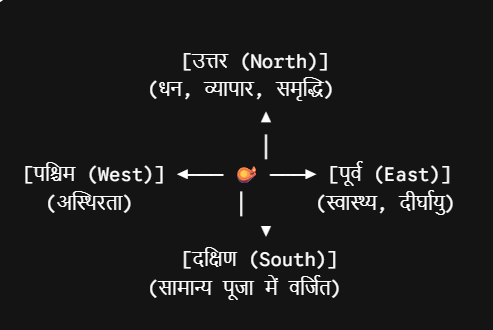
According to Vastu Shastra and Agni Purana, the direction of the flame (Jyoti) of the lamp has a direct impact on life:
East: Keeping the flame of the lamp towards the east direction gives longevity, good health and mental peace.
North: The north direction is the direction of Kubera, the lord of wealth; placing a flame in this direction brings wealth, business growth, and good fortune.
West: Placing the flame in the west direction can cause unnecessary conflict and mental stress.
South: Caution! The south direction is considered the direction of Yama and the ancestors. During daily worship, the flame of the lamp should not be directed towards the south (this is only permitted during Pitru Tarpan or special Tantric rituals).
Wick Selection: Round Wick vs. Long Wick Rules
Long wick: Long wicks are used in the worship of Goddess Lakshmi, Goddess Saraswati, the family deity, and Lord Vishnu. They promote family prosperity and bring wealth.
Round (Flower) Wick: Round wick is mainly used to attain stability and concentration in the worship of Lord Shiva, Hanuman Ji, Bhairava Ji and village deities.
One-faced vs. five-faced lamps
One Mukhi Deepak: Best for daily worship and personal sadhana.
Five-Faced Lamp (Panchapradeep): Symbolizes the five elements (earth, sky, air, fire, water) and the five vital forces. It is used during special aartis, anointments, and festivals to purify the atmosphere.
The significance of the eternal flame and the origin of Diwali
The " Akhand Jyot," lit during Navratri or special rituals, symbolizes continuity of resolve and unwavering devotion to God. It creates a protective circle around the home. Meanwhile, on the day of Kartik Amavasya (Diwali), a garland of lamps was lit to dispel darkness and usher in joy upon Lord Rama's return to Ayodhya after fourteen years of exile, which remains a center of India's cultural splendor even today.
The combined spiritual meaning of the two: inner surrender and outer illumination
The beauty of the Sanatan system of worship lies in its balance. When we place the coconut and the lamp together on the puja altar, it creates a complete spiritual cycle:
Shriphal: Coconut represents the 'breaking of ego' and 'pure humility of mind' within us .
Lamp: The lamp symbolizes spreading the 'light of knowledge' generated from that pure consciousness throughout the world.
Meaning: the dissolution of ego within (the Shriphal) and the manifestation of truth and knowledge outside (the Lamp) . Only when these two sentiments converge does a worship transcend ritual and become true spirituality.
What to do What not to do Always place a fresh coconut with hair and water on the Kalash.Do not keep dry, waterless or cracked coconut in the puja.After the puja is completed, distribute the coconut prasad among the family and devotees.Do not throw away the coconut offered in the puja or let it rot.Always place the lamp on a vessel, rice or flower base.Never place the lamp directly on the ground (this is considered a ground defect).Keep the flame of the lamp calm and steady during Aarti.Do not light another lamp from another lamp and do not let the lamp extinguish in the middle of the puja.While lighting the lamp, chant the mantra or meditate on your favorite deity.Never use a broken or cracked earthen lamp.
Scripturally compliant worship method and the role of the Yajaman app
In today's hectic lifestyle, sourcing the right materials for puja—such as authentic Sriphal with matted hair, pure Vedic A2 cow ghee, handmade cotton wicks, and brass or pure clay lamps—often poses a challenge for householders. Impurities in the ingredients or ignorance of the guidelines often lead to doubts about the ritual.
With this resolve, Yajaman App provides authentic and scriptural puja solutions to the devotees of Sanatan Dharma at home:
Verified Vedic Pandits: Through the Yajaman app, you can get online and offline pujas, Griha Pravesh, Satyanarayan Katha and Maha Yagna performed by experienced and Veda-reading Acharyas.
Personal Sankalp & E-Puja: If you are unable to be present at the pilgrimage sites due to busy schedule or distance, you can directly perform puja and diya-daan at famous temples with the Sankalp of your name and gotra through the Yajaman App.
Prasad at your doorstep: After the completion of the puja, the consecrated Shriphal, Raksha Sutra and divine Prasad are delivered safely to your doorstep.
The coconut and the lamp in puja are not merely visual props but profound spiritual symbols crafted by our ancient sages. The coconut teaches us how to break down rigid egos and surrender our inner self to God, while the lamp inspires us to dispel all darkness in the world through our virtues and knowledge.
Next time you decorate the puja plate, remember this sacred secret of the coconut and the lamp and worship God with complete devotion and dedication.
Frequently Asked Questions (FAQs)
Q1. Why is coconut called Shriphal?
In Sanskrit, "Shri" means Goddess Lakshmi and prosperity. According to mythology, coconut is the favorite fruit and abode of Goddess Lakshmi, hence the name "Shriphal."
Q2. Why is coconut broken during puja?
The coconut's hard outer shell symbolizes human ego and vices, while the white inside and water represent the pure soul. Breaking a coconut is an act of surrendering one's ego to God.
Q3. Is it better to light a ghee lamp or an oil lamp during puja?
Both have their own scriptural significance. A lamp lit with pure cow ghee is best for spiritual energy, knowledge, and happiness and prosperity. A lamp lit with sesame or mustard oil is used to ward off obstacles from enemies, the influence of Saturn, and other troubles.
Q4. In which direction should the puja lamp not be placed?
The flame of the lamp should never be directed south during daily prayers . The south direction is considered the direction of Yama and the ancestors. The east or north direction is best for daily rituals.
Q5. Can a broken or dry coconut be used in puja?
No, only a coconut filled with water, with its tufts intact, and fully unbroken should be offered during worship. A dry or cracked coconut is considered defective.
Q6. In which direction should the wick of the lamp be?
If you're lighting a ghee lamp, it should be on your right (to the deity's left), and an oil lamp should be on your left (to the deity's right). The wick should point east or north.
Q7. Can women break coconuts during puja?
Traditionally, coconuts are considered a symbol of the seed of creation and procreation, so in some regions, women do not break coconuts but simply offer them. However, offerings are open to anyone.
Q8. Why are rice or flowers placed under the lamp?
According to scriptures, the seat of Agni Dev should never be empty. Placing a lamp directly on the ground causes a sin, so a piece of rice or a copper plate is placed beneath it as the seat.